Back to Blog
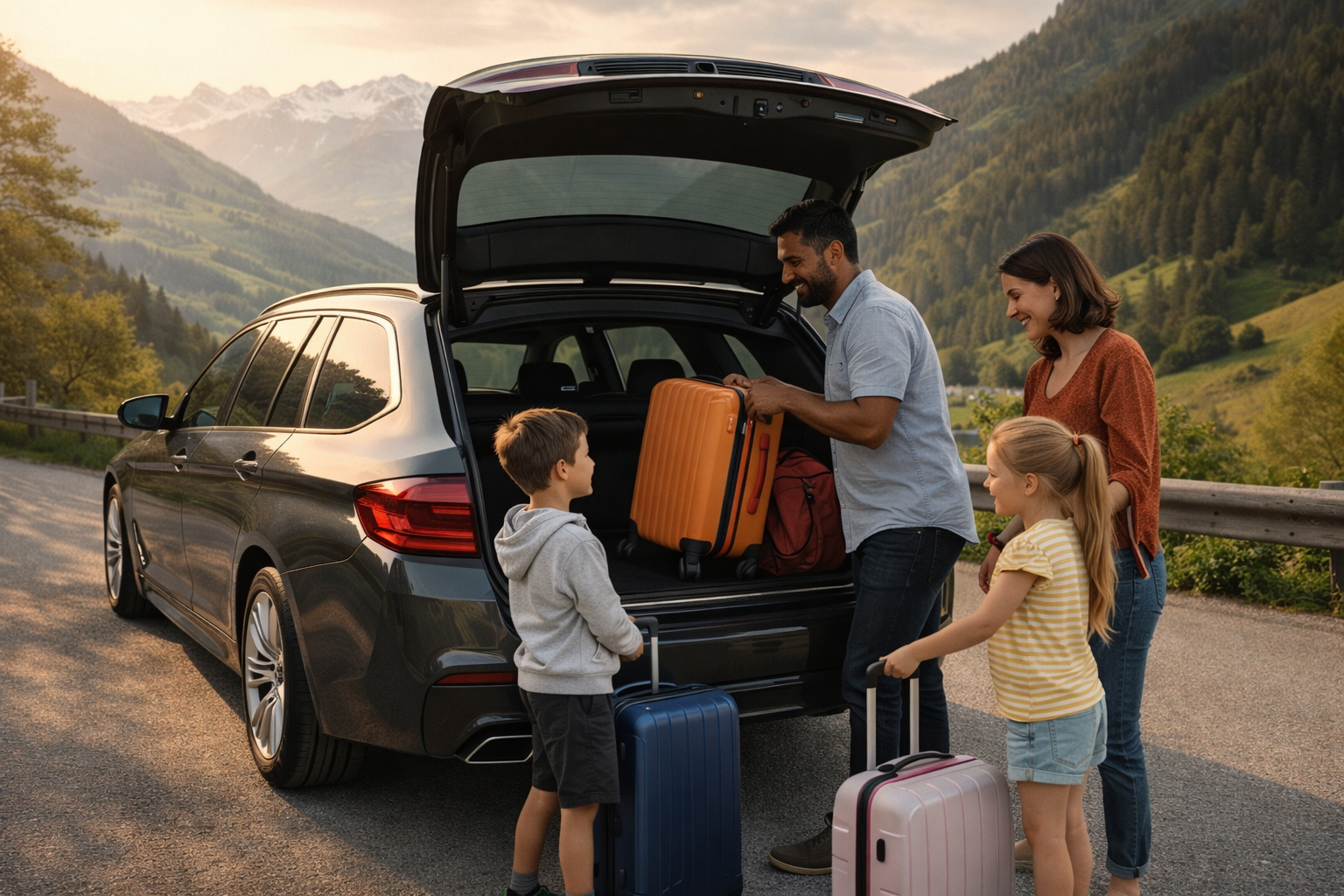
p>There's a particular kind of freedom that comes with loading your family into a car and driving across Europe. No fixed itinerary, no rushing through airports, no wrestling car seats onto unfamiliar rental vehicles at midnight. You stop when the kids need a break, you stay longer in places that surprise you, and you move on when you're ready.
But for non-EU families, the logistics can feel complicated. How do you actually drive your own car across Europe if you don't live here? Do you need to register it locally? What about insurance across multiple countries?
The answer is simpler than most people expect. There's a legal scheme — called the MT tourist plate (Matrícula Turística) — designed specifically for non-EU residents who want to buy a car in Europe, drive it freely across the continent, and keep it for as long as the adventure lasts.
This guide covers everything: how MT plates work for families, the best routes and countries for a road trip with kids, and the practical details that make the difference between a stressful trip and an unforgettable one.
Why Renting a Car Doesn't Work for Long Family Trips
For a weekend city break, a rental car makes sense. For a three-month family road trip across eight countries, it quickly becomes impractical — and very expensive.
The problems stack up fast:
- Cost — long-term rentals for a family-sized vehicle can easily reach €1,500–€2,500 per month, before fuel and extras
- Cross-border restrictions — many rental companies prohibit or charge extra for driving into certain countries
- Child seat chaos — rental seats are often old, poorly fitted, or simply unavailable at short notice
- No flexibility on vehicle — you get what's available, not what suits a family of four with luggage and a pushchair
- Mileage limits — unlimited mileage is rarely truly unlimited, and long routes across Europe will test those limits quickly
Families doing extended European trips — three months, six months, or a full year — consistently find that owning the car outright is cheaper, more comfortable, and far less stressful than renting. The only question is how to do it legally as a non-EU resident.
How Non-EU Families Can Drive Their Own Car in Europe
The MT tourist plate scheme is the legal framework that makes this possible. The scheme is available exclusively to non-EU residents — EU citizens and permanent EU residents are not eligible.
Here's how it works in practice for a family:
You purchase a car in Europe — typically in Germany, which has the continent's largest and most competitive used and new car market. The purchase is registered in Andorra at just 4.5% tax, instead of the 19–21% VAT that EU residents pay plus local registration taxes. For a family SUV worth €35,000, that's a saving of well over €5,000 before you've driven a single kilometre. You can browse available cars with final prices already shown at ImportoCotxe.ad.
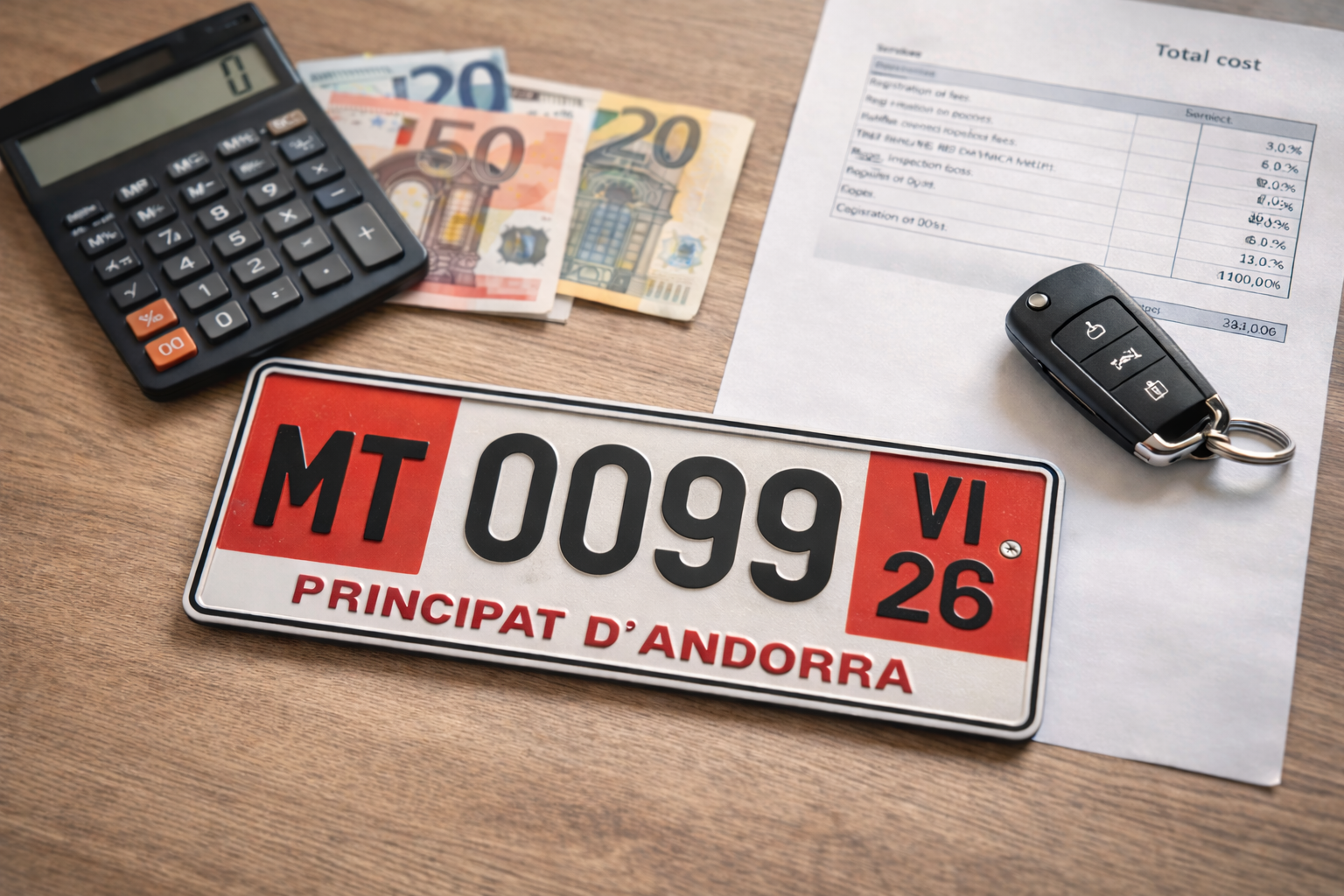
The car is then registered under MT tourist plates through YourCarInEurope.ad, based in Andorra. The registration includes a yearly insurance policy that covers you and your whole family across all the countries where you can legally drive — no need for separate policies at each border.
You drive. Freely. For as long as you like. The MT plate simply renews annually — a technical inspection and a new yearly insurance is all it takes to keep going.
The car is yours. When you eventually decide to stop travelling, you can sell it normally, register it in another country, or simply keep renewing. There's no obligation to export it or take any specific action.
Where Can You Drive with MT Plates?
MT plates give you remarkable geographic freedom. You can drive in virtually any country in Europe — the only restriction is that you cannot use the car in your own country of residence.
For a family from the US, Australia, Canada, or any other non-EU country, that means the entire European continent is open to you. Germany, France, Spain, Portugal, Italy, Austria, Croatia, Switzerland, Norway, the UK — all of it, with one plate and one insurance document.
Here are some of the most rewarding countries for a family road trip, and what makes each one worth the detour:
| Country | Family Highlight | Road Trip Note |
|---|---|---|
| Germany | Fairy-tale castles, Black Forest, Bavarian Alps | Excellent roads, great motorway rest stops with playgrounds for kids |
| Austria | Alpine lakes, Salzburg, Vienna's kid-friendly museums | Compact and beautiful — easy to cross in a day, worth staying a week |
| France | Loire Valley châteaux, Normandy beaches, Provence villages | Toll roads are well-maintained; péage stops have good facilities |
| Spain | Costa Brava, Pyrenees, Seville, Barcelona | Long drives between cities — plan overnight stops in smaller towns |
| Portugal | Algarve coast, Sintra, Douro Valley | Less traffic than Spain, relaxed pace ideal for families |
| Switzerland | Alpine scenery, lake towns, Zurich and Geneva | Covered by MT insurance; a motorway vignette is required |
| Italy | Tuscany, Amalfi Coast, Rome, Dolomites | Use the car for countryside — city driving in major centres is chaotic |
| Croatia | Dalmatian coast, Plitvice Lakes, islands | Stunning coastal road; plan ahead in summer near Split and Dubrovnik |
A classic family loop starting from Germany might go: Bavaria → Austria → Northern Italy → French Riviera → Spain → Portugal → back through France. That's easily three to four months of travel with children, every stage on your own schedule.
Practical Tips for Driving Across Europe with Kids
The logistics of a long family road trip across Europe are very manageable — but worth thinking through before you go.
Choose the right vehicle. With children, luggage, and a pram, you need space. An estate car (station wagon), large SUV, or minivan gives you the room to travel comfortably without everyone sitting on top of each other after day three. Germany's used car market has excellent options at every price point — and buying through the MT scheme means you choose exactly the car that suits your family, not whatever a rental company has available that week.
Plan for breaks, not just destinations. Kids need to get out of the car every 90–120 minutes. Build this into your routing. Many motorway rest stops in Germany, France, and Austria have playgrounds attached — a detail that makes an enormous practical difference on long driving days.
Understand country-specific rules. Traffic requirements vary across Europe. In France, you must carry a high-visibility vest per person and a warning triangle. Child seat regulations also differ slightly between countries. Your MT registration and insurance documentation will be accepted everywhere you drive, but local traffic rules still apply in each country.
Keep documents accessible. Your MT registration certificate, insurance documents, and passports should always be in the car. Border crossings within the Schengen Area are typically seamless, but spot checks do happen, particularly in Switzerland and at some Balkan borders.
Budget realistically. Fuel, motorway tolls, parking, and accommodation add up quickly with a family. The significant saving on vehicle purchase tax under the MT scheme helps offset these running costs — but build a realistic daily budget before you leave.
Frequently Asked Questions
Do I need EU residency to buy and drive a car in Europe with my family?
No. The MT tourist plate scheme is designed specifically for non-EU residents. You don't need a local address, tax number, or EU driving licence. You need a valid non-EU passport and confirmation that you are not a permanent EU resident. EU citizens and permanent EU residents are not eligible.
How long can we keep the car in Europe?
As long as you like. The MT registration renews annually — a technical inspection on the car and a new yearly insurance policy is all it takes. There is no maximum duration. Families who fall in love with European travel simply keep renewing year after year.
Does the insurance cover the whole family across all countries?
Yes. The annual insurance included with the MT registration covers all occupants across all the countries where you can legally drive with MT plates. You don't need separate policies per country — one document covers the full scope of your travels.
What type of car should we buy for a family road trip across Europe?
For a family of four with luggage, a large estate car or SUV is the most practical choice. Germany's used car market is strong for models like the Volkswagen Passat, Skoda Octavia, Volvo V90, or BMW X3 — all spacious, reliable, and with good resale value. Browse available options with final prices at ImportoCotxe.ad.
What happens to the car when we're done travelling?
The car is yours — you decide. You can sell it normally, register it in your home country, or register it anywhere else. When you no longer want to renew the MT plates, you simply stop. There's no obligation to export it or take any specific action at the end.